Description
We all know animals are affected by the climate crisis. But did you know the climate crisis is also affected by animals?
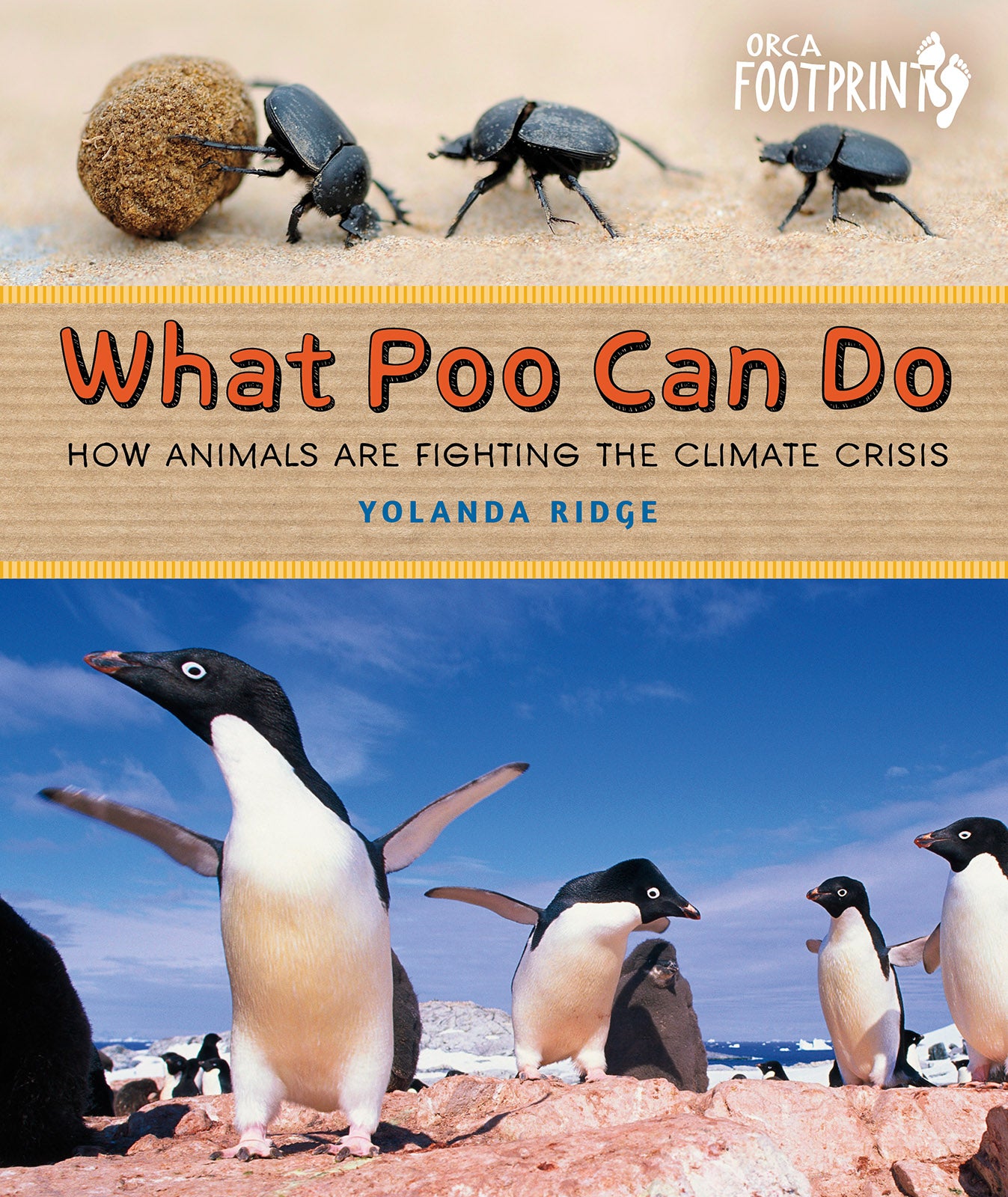
From whales to dung beetles, What Poo Can Do explores how animals big and small are helping the planet every time they do a number two. Come on a journey to different parts of the world to see how animals are fertilizing plants, storing carbon, preventing fires, reducing methane and even creating color-coded maps—all through their feces! Readers will discover how animal defecation makes a difference when it comes to the climate crisis. It's time to embrace the power of poo!
The epub edition of this title is fully accessible.
Author Bio
Yolanda Ridge is the author of three books in the Orca Footprints series, What Poo Can Do, Microbes to the Rescue and Beyond Earth, as well as two other juvenile nonfiction titles from Annick Press. She’s also written several middle-grade novels, including two environment-themed titles for Orca Young Readers. She has a master of science degree and is adept at making complex concepts understandable—a skill she uses in her science writing and teaching. She lives in Rossland, British Columbia.
Prizes
- BC Books for SchoolsCommended 2024
- Science Writers and Communicators of Canada (SWCC) Book Awards - Youth CategoryLong-listed 2024
- The Nature Generation Green Earth Book Award (GEBA) - Recommended ReadingCommended 2025
Review Quotes
“Provides food for thought, offers pertinent information, and equips interested middle graders with fodder for discussion and research”
— Sal's Fiction Addiction“Easy to read aloud to primary students and provides essential information to a generation facing the reality of the climate crisis. Students will be intrigued and amused at the focus on poo…suggests numerous ways to involve students in doing what they can do to fight climate change.”
— Canadian Teacher Magazine“Provides readers with concrete actions they can take to fight climate change, such as organizing a coastal cleanup or joining an organization that is working to make oceans safe for whales. Information is presented attractively in a straightforward manner. A humorous way to engage with a serious topic.”
— School Library Journal (SLJ)“Provides a wealth of information about the miraculous ways in which nature works to sustain, heal, and protect itself...an excellent Science resource for grades 4 to 7 as students learn about sustainable practices and evidence of climate change over time.”
— BC Books for Schools“This engaging book tackles a surprising topic head-on, transforming animal waste into a springboard for a fascinating exploration of ecology…Kids will be surprised and empowered to learn how even something seemingly gross can be a superhero for the Earth, inspiring them to see the world around them in a whole new light.”
— Children's Literature Comprehensive Database (CLCD)““While most environmental titles for children focus on how humans can protect and care for the planet, this book focuses on animals who are already assisting the cause—with poop!”
— Booklist“Well-organized and sustains the reader’s interest…Highly recommended.”
— CM: Canadian Review of MaterialsBiographical note
Yolanda Ridge is the author of fiction and nonfiction books for young readers, including Evolution Interrupted: How We Change Nature and How Nature Changes Us, CRISPR: A Powerful Way to Change DNA and Elliot Jelly-Legs and the Bobblehead Miracle. She has a master of science degree and is adept at making complex concepts understandable, a skill she uses in her science writing and teaching. Yolanda lives in Rossland, British Columbia.