Description
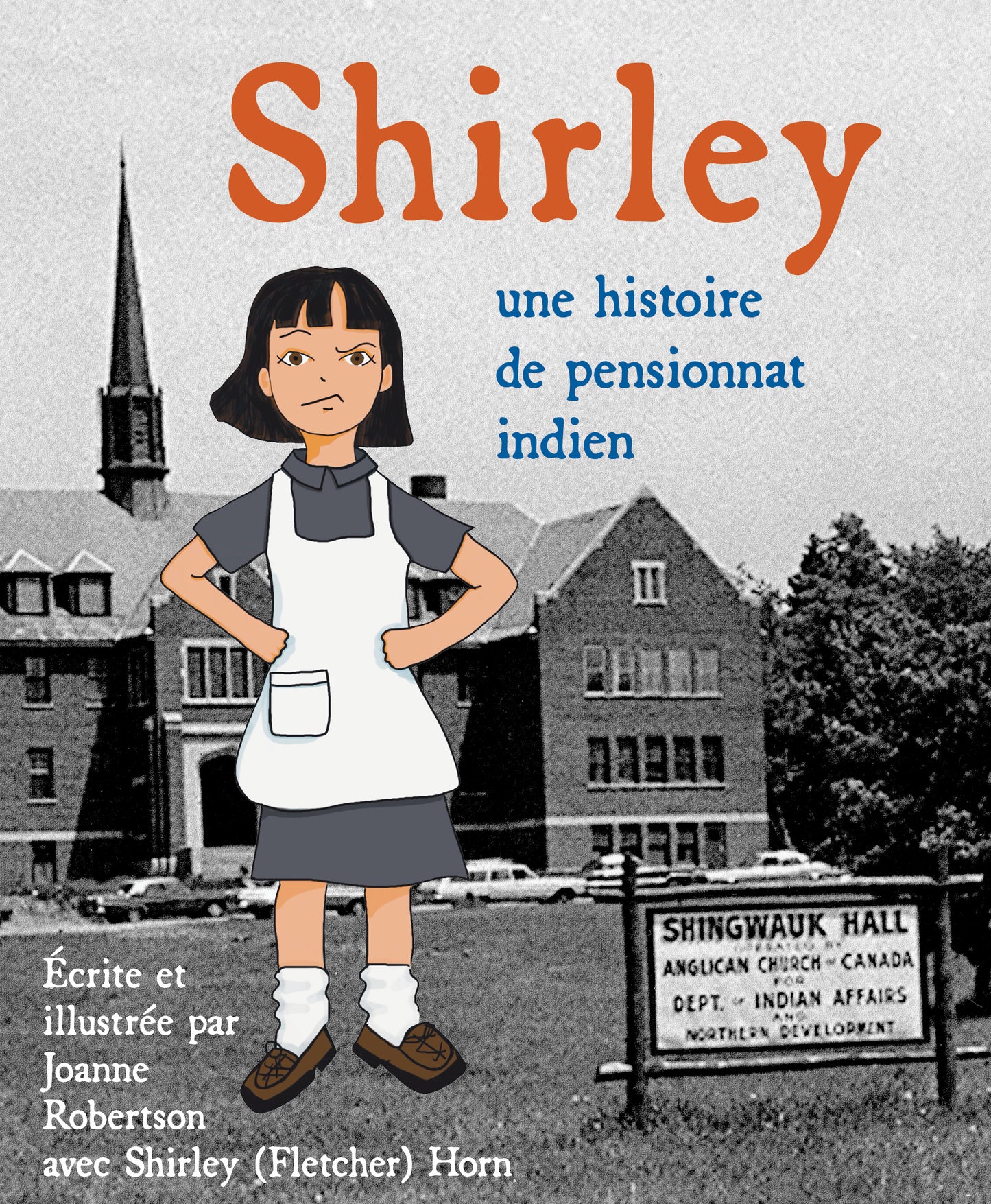
Shirley is only five years old when she is taken away by the Indian agent to live at a residential school.
She loves learning, but she is not there by choice. From the first day walking up the long, lonely stone steps of the school building, life is hard and full of rules. Separated from her brothers and sisters, she is truly on her own.
Shirley is very brave, but there is no one she loves to hold her at night when she is afraid. No one to tuck her in and comfort her. Shirley keeps going despite the sadness. She makes friends and has adventures. And most of all, she looks ahead to summertime, when she will be able to return to her family and the happiness of home.
A true story.
Prizes
- Junior Library Guild (JLG) Gold Standard SelectionCommended 2026
Table of contents
Table of Contents:
1. MY FAMILY
2. THE INDIAN AGENT
3. TO TOWN
4. THE STRANGER
5. THE FRONT STEPS
6. TOO YOUNG
7. THE CHICKEN COOP
8. THE CLASSROOM
9. KLIK-ETY KLIK
10. COMPETITION
11. THE BARN
12. BEDTIME
13. SICKNESS
14. SHARING BEDTIME STORIES
15. THE SHINGWAUK MOVE
16. FILLING THE HOLES
17. THE SCARF
18. THE SNAKE
19. THE CONFIRMATION DRESS
20. NOVEMBER
21. CHRISTMAS SOCKS
22. I DARE YOU
23. THE WALK
24. CHOCOLATE BARS BEHIND BARS
25. THE SUMMONS
26. THE ESCAPE
27. CLASSICAL SUNDAYS
28. ONLY ONE MILE
29. THE PRECIOUS GIFT
30. THE FIRST YELLOW LEAF
31. EPILOGUE
32. AUTHORS' NOTES
33. CREDITS
Review Quote
Review Quote
"Short vignettes offer poignant snapshots of Horn’s childhood, from being separated from her siblings and enduring illness without appropriate care to the cutting of her hair for disobedience and forbidding elders from using the Cree language around her. Balancing these cruel and painful memories are moments of joyful resistance and survival, such as building camaraderie during chores, proudly defending her tiny self from bigger would-be bullies, and, when dared by a friend, pretending to faint during church to the delight of her classmates. Illustrations using historical photographs and digital overlays reinforce these experiences of mixed emotions and reconciliation."
Review Quote
"Engaging, educational, and emotional....The illustrations are very cool – Joanne’s illustrations are superimposed over archival photos from the Shingwauk Indian Residential School. Very interesting way to tell the story."
Review Quote
"Shirley’s story is painful yet triumphant.... Robertson’s uniquely powerful illustrations place cartoony, defined figures against often black-and-white photos, prioritizing the children’s humanity with firm and uncompromising lines and shapes that dominate the dreadful reality of the backgrounds."
Review Quote
"Told with clarity and care by author Joanne Robertson, with Shirley (Fletcher) Horn, this true story centres a child’s experience of residential school without softening its impact. It honours Shirley’s courage while reminding readers of the lasting harm of these institutions and the strength required simply to survive them."
Review Quote
"Robertson’s illustrations...feature colourful characters representing Horn, her fellow students and family members who are superimposed over various photographs....The theme of resiliency is constant throughout the book."
Review Quote
"One of the book’s recurring motifs—the quilt block surrounding the Indian agent, extends this instinct into material form. The real quilt block was made by Robertson’s mother from old flour bags, the same kind of bags Shirley and her siblings used as pillowcases, and to pack their clothes in. The choice subtly bridges family memory and the historical record.... As Shirley: An Indian Residential School Story finds its way into homes, classrooms, and school libraries, Robertson situates its ideal reception within Horn’s lifelong advocacy."
Review Quote
"Horn maintains a mischievous sense of humor that helps the subject and her peers survive: 'Daring each other to feel alive, we made our own joy,' unadorned text states, recounting time spent swinging on barn ropes or hiding snakes in a pocket. Saturated cartoon illustrations portraying key moments are superimposed over historical b&w photographs of Horn’s journey, culminating in a somber tribute to both the pain and joy she experienced throughout her youth."
Review Quote
"Highly recommended for any school or public library collection, this book is a must-have and must-read. The short, potent, chapters provide readers glimpses not only into the lived-experiences of a survivor, but also how Shirley actively tried to cope, had to form perspectives, during those times- whether emotionally, mentally, as well as physically- in order to simply survive it....An exceptionally unique, crucial narrative."
Review Quote
"For children to be taken from those who loved them and to be forced to dissociate from family and their culture and heritage is heartbreaking. Shirley (Fletcher) Horn's story, as shared with Joanne Robertson...is an honest portrayal of her experiences, but still told in an age-appropriate tone. Enough stories of survivors of residential schools and of those who were victimized in those schools are plentiful and tragic. But, because Joanne Robertson and Shirley (Fletcher) Horn take Shirley's reminiscences, good and bad, and focus on her perspective on them and how she dealt with everything, what comes across most importantly is her resilience. As a child, she made herself think of other things, to delve into her learning, and to 'shut off my loneliness.' She fought off bullies, fear, and, most of all, that loneliness. She is strong and gutsy, and she endured."
Review Quote
"A moving and powerful book for all ages."
Review Quote
"Through powerful words and illustrations, this book honors Shirley’s lived experiences at residential school while also highlighting her advocacy in ensuring that residential school histories are remembered and taught. Shirley offers an accessible entry point into a complex topic while centering Survivor voices. This book is a moving resource for educators and families committed to truth-telling and learning."
Review Quote
"What makes this book especially powerful for today's readers is how it balances truth-telling with strength-building. Shirley's story doesn't look away from cruelty, but it keeps circling back to the skills and spirit that helped her survive: sewing, singing, standing up to bullies, and claiming small treasures... Visually, the book is stunning. Archival photographs of Shingwauk Hall and other historical images are layered with Robertson's bold, contemporary illustrations, creating an innovative collage style that literally draws new life over old structures."
Review Quote
“Shirley: An Indian Residential School Story should be an anchor text in any class to be shared throughout the year so that young readers have a first hand account and to ensure they are learning what really went on at the schools, through the lens of survivors.”
Review Quotes
"Through powerful words and illustrations, this book honors Shirley’s lived experiences at residential school while also highlighting her advocacy in ensuring that residential school histories are remembered and taught. Shirley offers an accessible entry point into a complex topic while centering Survivor voices. This book is a moving resource for educators and families committed to truth-telling and learning."
— Krista McCracken, Researcher & Curator, Shingwauk Residential Schools Centre"A moving and powerful book for all ages."
— 49th Shelf"Engaging, educational, and emotional....The illustrations are very cool – Joanne’s illustrations are superimposed over archival photos from the Shingwauk Indian Residential School. Very interesting way to tell the story."
— Anishinabek News"What makes this book especially powerful for today's readers is how it balances truth-telling with strength-building. Shirley's story doesn't look away from cruelty, but it keeps circling back to the skills and spirit that helped her survive: sewing, singing, standing up to bullies, and claiming small treasures... Visually, the book is stunning. Archival photographs of Shingwauk Hall and other historical images are layered with Robertson's bold, contemporary illustrations, creating an innovative collage style that literally draws new life over old structures."
— Say Magazine"Robertson’s illustrations...feature colourful characters representing Horn, her fellow students and family members who are superimposed over various photographs....The theme of resiliency is constant throughout the book."
— IndigiNews"Horn maintains a mischievous sense of humor that helps the subject and her peers survive: 'Daring each other to feel alive, we made our own joy,' unadorned text states, recounting time spent swinging on barn ropes or hiding snakes in a pocket. Saturated cartoon illustrations portraying key moments are superimposed over historical b&w photographs of Horn’s journey, culminating in a somber tribute to both the pain and joy she experienced throughout her youth."
— Publishers Weekly"Told with clarity and care by author Joanne Robertson, with Shirley (Fletcher) Horn, this true story centres a child’s experience of residential school without softening its impact. It honours Shirley’s courage while reminding readers of the lasting harm of these institutions and the strength required simply to survive them."
— Open Book"Short vignettes offer poignant snapshots of Horn’s childhood, from being separated from her siblings and enduring illness without appropriate care to the cutting of her hair for disobedience and forbidding elders from using the Cree language around her. Balancing these cruel and painful memories are moments of joyful resistance and survival, such as building camaraderie during chores, proudly defending her tiny self from bigger would-be bullies, and, when dared by a friend, pretending to faint during church to the delight of her classmates. Illustrations using historical photographs and digital overlays reinforce these experiences of mixed emotions and reconciliation."
— Booklist"Shirley’s story is painful yet triumphant.... Robertson’s uniquely powerful illustrations place cartoony, defined figures against often black-and-white photos, prioritizing the children’s humanity with firm and uncompromising lines and shapes that dominate the dreadful reality of the backgrounds."
— The Bulletin of the Center for Children's Books"One of the book’s recurring motifs—the quilt block surrounding the Indian agent, extends this instinct into material form. The real quilt block was made by Robertson’s mother from old flour bags, the same kind of bags Shirley and her siblings used as pillowcases, and to pack their clothes in. The choice subtly bridges family memory and the historical record.... As Shirley: An Indian Residential School Story finds its way into homes, classrooms, and school libraries, Robertson situates its ideal reception within Horn’s lifelong advocacy."
— Sesaya Arts Magazine"Highly recommended for any school or public library collection, this book is a must-have and must-read. The short, potent, chapters provide readers glimpses not only into the lived-experiences of a survivor, but also how Shirley actively tried to cope, had to form perspectives, during those times- whether emotionally, mentally, as well as physically- in order to simply survive it....An exceptionally unique, crucial narrative."
— Fab Book Reviews"For children to be taken from those who loved them and to be forced to dissociate from family and their culture and heritage is heartbreaking. Shirley (Fletcher) Horn's story, as shared with Joanne Robertson...is an honest portrayal of her experiences, but still told in an age-appropriate tone. Enough stories of survivors of residential schools and of those who were victimized in those schools are plentiful and tragic. But, because Joanne Robertson and Shirley (Fletcher) Horn take Shirley's reminiscences, good and bad, and focus on her perspective on them and how she dealt with everything, what comes across most importantly is her resilience. As a child, she made herself think of other things, to delve into her learning, and to 'shut off my loneliness.' She fought off bullies, fear, and, most of all, that loneliness. She is strong and gutsy, and she endured."
— CanLit for Little Canadians“Shirley: An Indian Residential School Story should be an anchor text in any class to be shared throughout the year so that young readers have a first hand account and to ensure they are learning what really went on at the schools, through the lens of survivors.”
— Storytime with Stephanie