Description
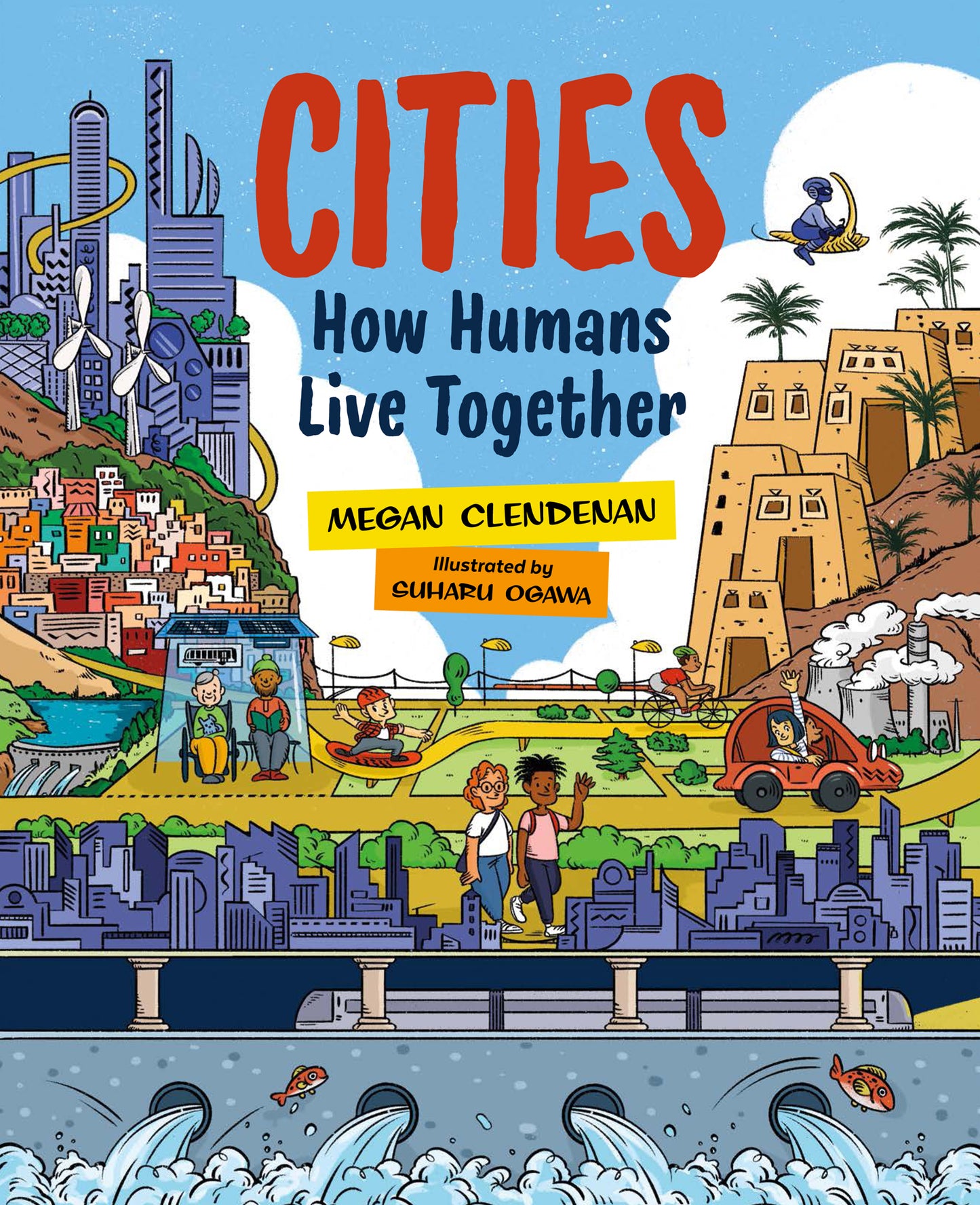
If you could design a city that would be both a great place to live and good for the planet, what would it look like?
Today, about four billion people—more than half the world’s population—live in cities. This number could rise to seven billion by 2050. Cities face big challenges, including threats from climate change, food insecurity, a lack of clean water and rapid population growth, but they are also places where innovation and sustainability can thrive.
Cities: How Humans Live Together travels through time to explore questions like When and why did cities form? How did people access food and water? Where did they go to the bathroom? Peek into the past to see how cities have changed through time and explore what could make cities more sustainable and welcoming for today and tomorrow.
The epub edition of this title is fully accessible.
Author Bio
Megan Clendenan enjoys learning about how people ate throughout history and hopes that the foods of the future will be more sustainable and just. She is the author of Cities: How Humans Live Together and the Green Earth Award winner Fresh Air, Clean Water: Our Right to a Healthy Environment. She is a co-author of Design Like Nature: Biomimicry for a Healthy Planet, part of the Orca Footprints series. Megan lives near Vancouver, British Columbia, with her family, where she likes growing vegetables in her backyard.
Suharu Ogawa is a Toronto-based illustrator. Her love for drawing started in a kindergarten art school after being kicked out of calligraphy class for refusing to convert to right-handedness. Formally trained in art history and cultural anthropology, she worked for several years as a university librarian until her passion for illustration called her out of that career and into the pursuit of a lifelong dream. Since then, Suharu has created illustrations for magazines, public art projects and children's books, including All Consuming: Shop Smarter for the Planet, Cities: How Humans Live Together and Why Humans Work: How Jobs Shape Our Lives and Our World. She also teaches illustration at OCAD University in Toronto.
Prizes
- BC Books for SchoolsCommended 2023
- The Society of Children’s Book Writers and Illustrators (SCBWI) Golden Kite Award - Nonfiction Text for Older ReadersNominated 2023
- Children's Book Council Librarian Favorites Award 6th - 8th GradeCommended 2024
- CCBC Best Books for Kids & TeensCommended 2023
- The Nature Generation Green Earth Book Award (GEBA) - Children’s NonfictionLong-listed 2024
Review Quotes
“Provides historical insight into the development and progress of cities over time in this cross-curricular nonfiction text. Can prompt students to dig deeper into the history of their own cities and understand how the roles and responsibilities of local governments have shaped how they came to be.”
— BC Books for Schools“Older readers with a fascination for cities planning, global history and those looking for a research text will find a wealth of information in this book…Ogawa provides playful, expressive illustration alongside beautiful global photography on every page…Readers will look forward to future nonfiction ecological endeavours by Clendenan.”
— Children's Literature Comprehensive Database (CLCD)Biographical note
Megan Clendenan has lived in all sizes of cities and loves to explore new neighborhoods on foot. She has traveled to school or work by subway, train, bus, bicycle and even by boat. She is the author of Fresh Air, Clean Water: Our Right to a Healthy Environment and co-author of Design Like Nature, part of the Orca Footprints series. Megan lives near Vancouver, British Columbia, with her family, where she is learning to grow vegetables in her backyard.
Suharu Ogawais a Toronto-based illustrator. Formally trained in art history and cultural anthropology, she worked for several years as a university librarian until her passion for illustration called her out of that career and into the pursuit of a lifelong dream. Since then Suharu has created illustrations for magazines, public art projects and children’s books. She also teaches illustration at OCAD University in Toronto.