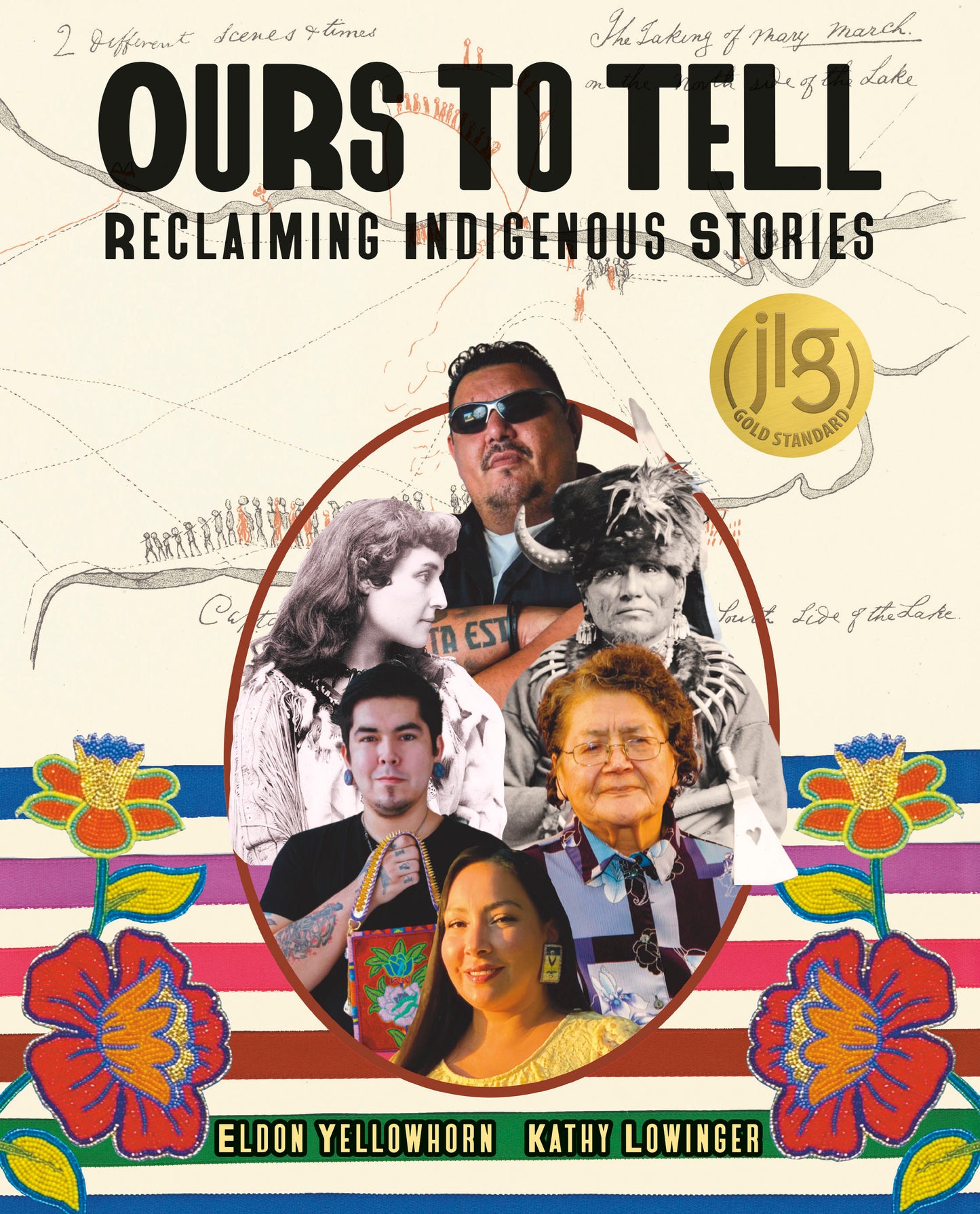
Description
- IN THEIR OWN WORDS: Indigenous creators who give voice to their own stories and as a consequence, set the record straight
- AWARD-WINNING WRITING TEAM: Professor Eldon Yellowhorn and Kathy Lowinger previous books received heaps of recognition. Sky Wolf's Call was picked as a Junior Library Guild Gold Standard Selection! Kirkus called What the Eagle Sees: Stories of Indigenous Rebellion and Renewal "Essential" in the starred review.
- EMPOWERING: For Indigenous youth who have not had the opportunity to learn about this body of knowledge, it is empowering and a source of pride. For non-Indigenous youth, learning about a worldview that may be brand new to them can be a step toward reconciliation and moving forward together.
- EDUCATOR RESOURCES: Free resources will be available for download at AnnickPress.com, and in Edelweiss.
- FOR FANS OF: Turtle Island, What the Eagle Sees, and Sky Wolf’s Call
- LEVELING INFO: F-P Guided Code: T - Grade Five I. Lexile Code: 990 L
Author Bio
ELDON YELLOWHORN (Piikani Nation) is a renowned and highly respected professor of Archeology and Indigenous Studies at Simon Fraser University, British Columbia. He is the author of three award-winning books for children.
KATHY LOWINGER is the author of many award-winning children’s books, including What the Eagle Sees, Sky Wolf’s Call, Turtle Island and Ours to Tell. She lives in Toronto, Canada.
Table of contents
Table of Contents
A Note about Language and Terms
Introduction: Ours to Tell
Part One: We Tell Our Story in Images and Symbols
Chapter 1: Gaspar Antonio Chi, Rebel Scribe (Maya, 1531–1610)
Chapter 2: Sequoyah Invents a Syllabary (Cherokee, c. 1775–1843)
Part Two: We Report the Story
Chapter 3: Elias Boudinot’s Story Was a Warning (Cherokee, 1804–1839)
Chapter 4: Ella Cara Deloria’s Insider Story (Yankton Sioux, 1889–1971)
Tim Fontaine Tells the Story with Satire (Sagkeeng First Nation in Manitoba)
Part Three: Our History is in Our Poems, Songs, and Written Stories
Chapter 5: Pauline Johnson, Poet Pop Star (Mohawk, 1861–1913)
Chapter 6: Tommy Orange Tells an Urban Tale (Cheyenne and Arapaho, b. 1982)
Chapter 7: Rita Joe Finds Her Talk (Mi’kmaq, 1932–2007)
Chapter 8: Marilyn Dumont’s Métis Voice (Métis, b. 1955)
Chapter 9: Jay Odjick Tells a Superhero Story (Zibi Anishinabeg)
Part Four: Our Stories Bear Witness
Chapter 10: Beatriz and Catalina: Court Records Tell Their Story (Maya, c. 1516)
Chapter 11: Shawnadithit Maps Her Story (Beothuk, c. 1800–1829)
Chapter 12: Standing Bear: Warrior Witness (Oglala Sioux 1859–c.1935)
Chapter 13: Ada Blackjack Kept a Journal (Inupiaq, 1898–1983)
Part Five: Our Hands Tell Our Story
Chapter 14: Agnes Woodward Stitches Her Story (Plains Cree from Kawactoose First Nation, 1982)
Chapter 15: Elias Jade Not Afraid Beads His Story (Apsaalooke, b. 1991)
Chapter 16: The I-Collective Tells the Story with Food
Part Six: Our Stories Go On
Chapter 17: Eldon Yellowhorn (Piikani Nation)
Review Quotes
“A concise yet comprehensive book that balances the historical and contemporary stories of Indigenous people.”
“A fascinating look at how stories can be reclaimed to empower voices both past and present.”
“A succinct and illuminating volume that decenters colonist tellings to instead highlight Native peoples’ experiences and perspectives.”
— Publishers Weekly, 04/25/25 “This luminous work is more than a collective biography. It’s a reclamation of Indigenous stories, often manipulated, destroyed, and untold.”